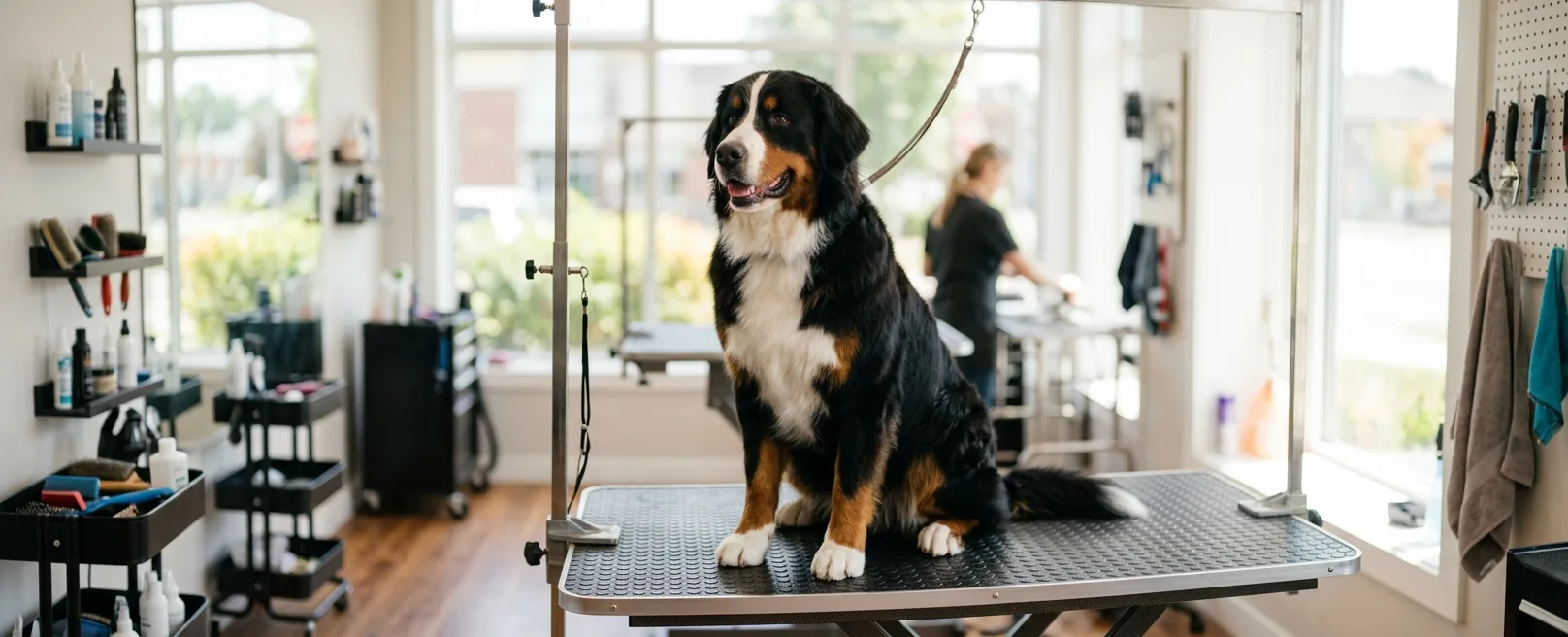
Bernese Mountain Dog Grooming Guide
Expert care for that thick, beautiful double coat - cage-free in Lynchburg VA
The Bernese Mountain Dog Coat
Bernese Mountain Dogs have one of the most stunning coats in the dog world - a thick, moderately long double coat with that iconic tri-color pattern of jet black, bright white, and rich rust. Originally bred to work in the Swiss Alps, their coat was designed to withstand harsh mountain winters. That means it's dense, it's heavy, and it sheds - a lot. Like the Chow Chow, the Bernese requires dedicated double coat care from a groomer who understands the breed.
The outer coat is slightly wavy to straight with a natural sheen, while the soft, woolly undercoat provides insulation. Together, they create a coat that requires consistent grooming to keep healthy and manageable.
Never Shave a Bernese Mountain Dog
It's tempting to shave a Bernese in the summer heat, but this is one of the worst things you can do for their coat:
- The double coat insulates against both heat and cold - shaving removes this natural temperature regulation
- Shaving can cause permanent coat damage - the undercoat and guard hairs may never grow back correctly
- Exposes skin to sunburn, insect bites, and UV damage
- Can trigger post-clipping alopecia, where the coat grows back patchy or not at all
Instead, keep up with regular deshedding treatments to remove the thick undercoat and allow air circulation. That's what keeps your Berner cool - not a razor.
Grooming Frequency
| Coat Condition | Professional Grooming | Home Brushing |
|---|---|---|
| Short natural coat (maintenance) | Every 6-8 weeks | 2-3 times per week |
| During shedding season (spring/fall) | Every 4-6 weeks | Daily brushing |
Bernese Mountain Dogs "blow" their undercoat twice a year - typically in spring and fall. During these heavy shedding periods, you'll find tufts of fur everywhere. More frequent professional deshedding treatments during blowout season make a significant difference in how much fur ends up on your furniture.
Key Grooming Areas
Feathering
Bernese have long, flowing feathering behind the front and rear legs, behind the ears, and on the chest. These areas tangle and mat easily, especially after outdoor activity. Regular brushing and trimming keeps feathering neat and prevents painful mats from forming close to the skin. If mats have already set in, our dematting service can help.
Undercoat Management
The dense woolly undercoat is where most shedding originates. Professional deshedding treatments using high-velocity dryers and undercoat rakes remove loose fur that regular brushing can't reach. This is the single most important part of Bernese grooming.
Paw Pad Care
Bernese grow thick fur between their paw pads that collects dirt, ice, and debris. Trimming this fur flush with the pads improves traction, prevents ice balls from forming in winter, and keeps their feet clean and comfortable.
Tail Grooming
That long, bushy Bernese tail is gorgeous but prone to tangles and collecting debris. The tail should be brushed thoroughly during every grooming session, with any mats carefully worked out. A light trim keeps the shape tidy without losing the natural plume.
Shedding Management
Let's be straightforward - Bernese Mountain Dogs are notorious shedders. They shed moderately year-round and heavily during seasonal coat blowouts. There's no way to stop shedding entirely, but you can manage it effectively:
- Professional deshedding treatments - A thorough bath, high-velocity blow-dry, and undercoat removal can extract an astonishing amount of loose fur in a single session
- Use the right tools at home - An undercoat rake is essential for reaching the dense underlayer that slicker brushes can't penetrate
- Brush in sections - Work methodically through the coat, lifting the outer layer to get down to the undercoat underneath
- Don't skip baths - A clean coat sheds less than a dirty one, and bathing helps loosen dead undercoat
- Consider a deshedding shampoo and conditioner - These products help release undercoat during the bath
- Increase frequency during blowouts - When your Bernese starts dropping clumps, switch to daily brushing and consider an extra professional deshedding appointment
Home Care Tips
- Brush with an undercoat rake 2-3 times per week - This is the most effective tool for reaching the dense undercoat that causes the most shedding
- Follow up with a slicker brush - After the undercoat rake, a slicker brush smooths the outer coat and catches any remaining loose fur
- Check ears weekly - Bernese ears are floppy and can trap moisture, leading to infections. Look for redness, odor, or excessive wax
- Trim nails every 2-3 weeks - Large breeds put a lot of weight on their feet, and overgrown nails can cause joint problems
- Watch for hot spots in summer - That thick double coat can trap moisture against the skin, especially after swimming or rain. Dry your Bernese thoroughly and watch for red, irritated patches
- Pay attention to the feathering - Run a comb through the longer hair behind the legs and ears to catch tangles before they become mats
- Keep the sanitary area trimmed - With all that fur, the rear end can get messy. A quick trim between professional grooms keeps things clean
Related Grooming Guides
From our blog: Why You Should Never Shave a Double-Coated Dog
Ready to Book Your Bernese's Groom?
Let's get that thick double coat under control. One-on-one, cage-free grooming designed for large breeds.