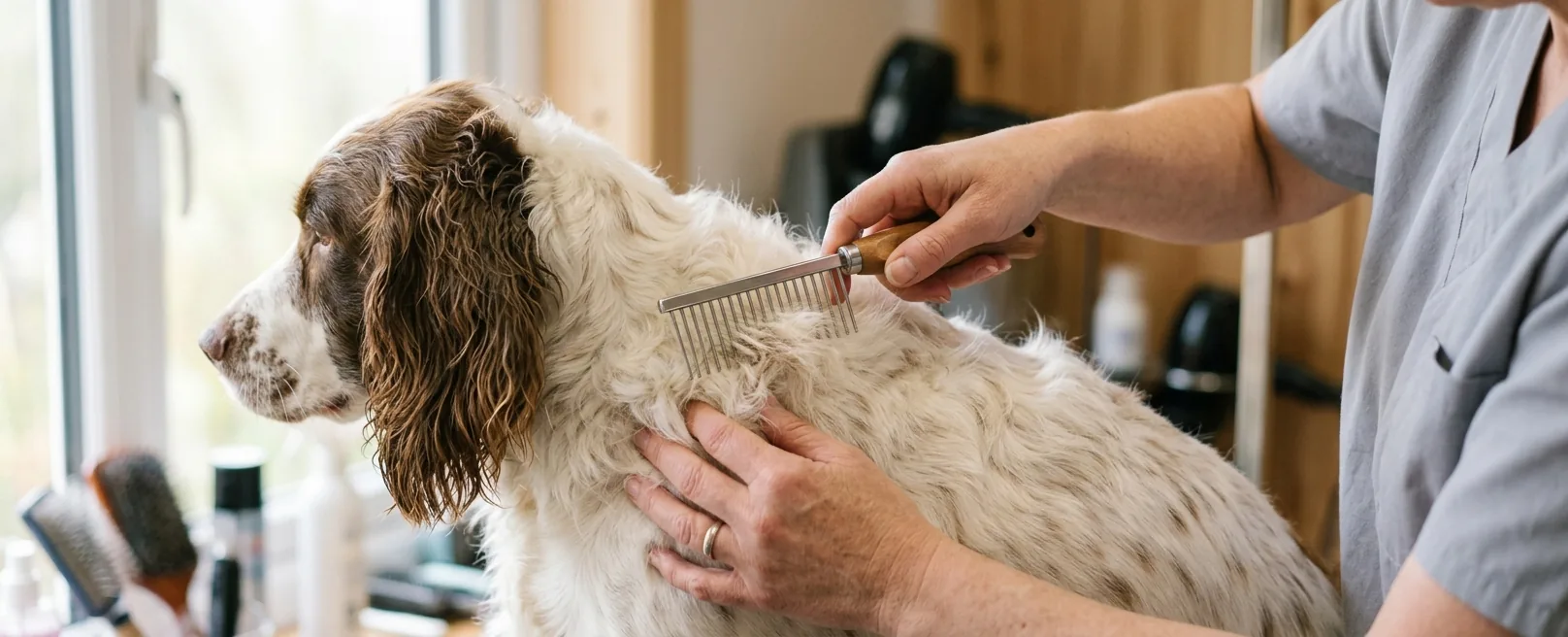
De-matting & Brush Out Services
Tangled coat? We'll work through it - with patience, skill, and your dog's comfort as the priority.
Why Dogs Get Matted
Mats happen. It doesn't mean you're a bad pet owner. Some coats are just more prone to tangling, and once a mat starts forming, it grows by trapping more hair into itself every day. The hair you brushed yesterday isn't the hair that's matting today - it's the hair underneath, that the brush never reached.
- Curly or wavy coats (Doodles, Poodles, Bichons, Portuguese Water Dogs, Havanese)
- Double coats that shed seasonally and trap the dead undercoat against the skin
- Friction areas: behind ears, armpits, collar/harness line, between back legs
- Getting wet - rain, pool, James River swim - without being fully dried and brushed before the coat curls back up
- Puppy coat transition (around 9-12 months for doodles) when fluffy puppy fur is being replaced by denser adult coat that tangles into the old
- Drying off in a kennel or crate after a bath - pressure flattens the wet coat into mats overnight
What I Can Do Depends on Severity
Light Matting
Small tangles at the surface, easy to lift with a slicker and comb. Adds maybe 15-20 min to a normal groom. Coat stays at length.
Moderate Matting
Larger mats but the skin is still movable underneath. I can usually save the coat with a combination of detangling spray, sectional combing, and a dematting tool used carefully. Adds 30-60 min.
Severe Matting
Pelting - when the entire coat is one tight, skin-locked mat. The kindest option is a humane shave-down. Coat grows back; pain doesn't have to happen.
How I Decide
The pencil test is simple: I try to slide a pencil between the mat and the skin. If it goes through, I can probably save the coat with patient work. If the mat lies flat against skin and the pencil won't pass, that mat has to come off as a shave - pulling on it would tear skin. I always show you the area, explain what I'm seeing, and let you decide before I cut. No surprise shave-downs.
What Causes the Most Pain
People assume dematting hurts because of the combing motion. The actual pain comes from tension - when a mat is pulled against the skin it's attached to. That's why I work small sections, hold the mat at its base (so the skin isn't tugged), use a high-quality detangling spray that lets the hair slide, and stop the moment a dog signals discomfort. A patient dematting session is far less stressful than people expect; an aggressive one is traumatic. The same dog gets totally different experiences depending on who's holding the comb.
When a Shave is the Right Call
Severe pelting means the coat is suffocating the skin underneath. Air can't reach, moisture stays trapped, hot spots form, and parasites have an easy time hiding. I've seen pelted coats hiding open sores that the owner had no idea existed. In those cases, a shave-down isn't a defeat - it's the start of recovery. The dog feels lighter immediately, the skin can breathe, and we can rebuild the coat properly over the next few months with a maintenance schedule.
Honest Pricing + Policy
I'll always try to save as much coat as possible. But I won't hurt your dog to save a hairstyle. Dematting moderate mats adds $20-50 to the groom depending on time. Severe shave-downs are charged at the standard groom rate, no penalty for the matted state. Call (434) 227-3619 or text me a photo and I'll give you an honest read before you commit to an appointment.
Preventing Future Mats
The best dematting is the kind you never need. Here's what actually works between appointments:
- Brush down to the skin, not just the surface - Surface brushing creates a false-clean coat with mats hiding underneath. Lift the outer coat in sections and comb to skin level.
- Use a metal comb after every brushing - If the comb glides through, the coat is clear. If it catches, that's a mat starting. Catch them at the comb stage, not the scissor stage.
- Brush BEFORE the bath, not after - Water tightens existing tangles into mats. A bath without pre-brushing is how doodle coats pelt in one weekend.
- Dry thoroughly with a real dryer - Air-drying a curly coat curls it right back into knots. A high-velocity blow-dryer pulls the hair straight as it dries, preventing the curl-trap.
- Keep up with appointments - Every 4-6 weeks for curly coats, every 8-10 weeks for low-shed wirehair. Skip one and you can usually catch up; skip two and we're often doing dematting work instead of grooming work.
- Switch collars to a flat buckle or harness off during the day - The friction zone under a collar is the #1 hidden mat location on every dog I see.
Need Help With a Matted Coat?
No judgment here. Let's figure out the best plan for your dog.