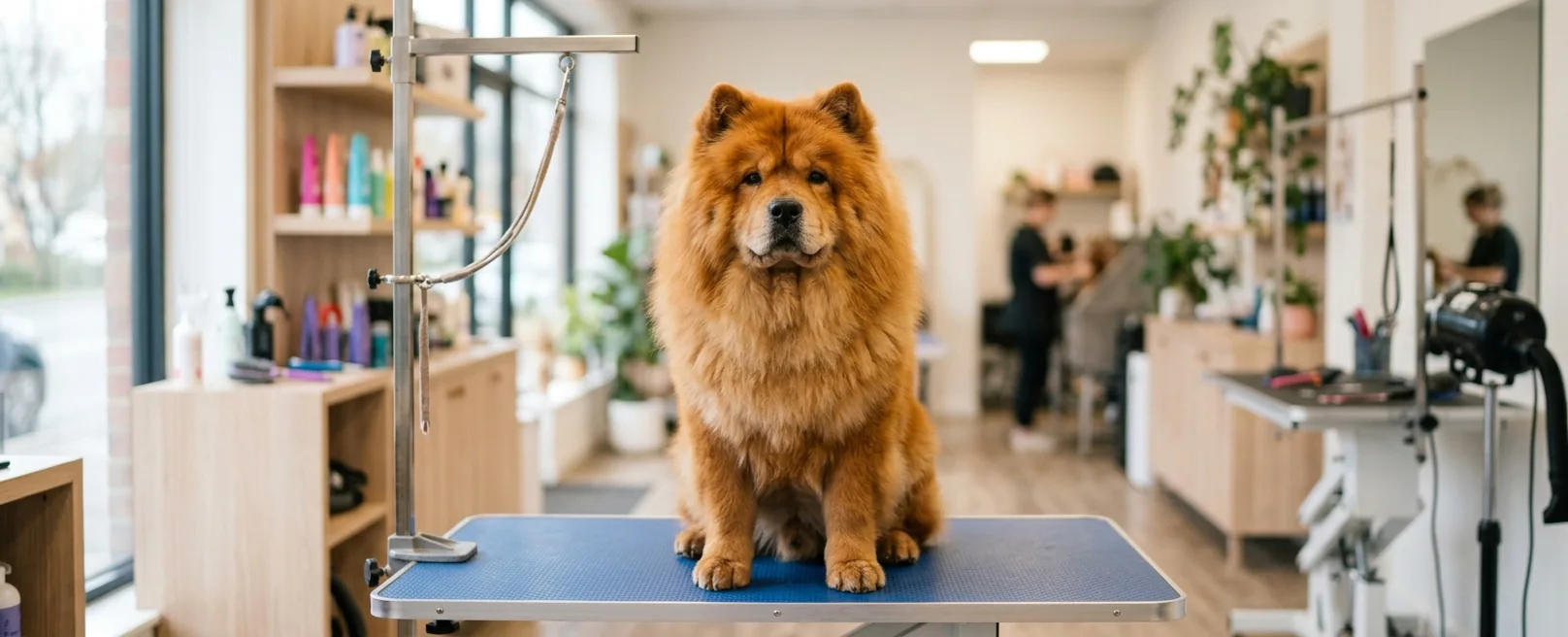
Chow Chow Grooming Guide
Caring for the iconic lion-like mane and dense double coat of one of the most ancient dog breeds.
The Chow Chow Coat
Chow Chows come in two coat varieties: rough and smooth. The rough coat is what most people picture , a thick, dense undercoat paired with a profuse, stand-off outer coat that forms the breed's famous lion-like ruff around the head and neck. The smooth coat variety is shorter and more plush but still dense and double-layered. Both varieties shed heavily, especially during seasonal coat blows in spring and fall.
Temperament During Grooming
Chow Chows are known for being independent, dignified, and sometimes territorial , traits that can make grooming challenging. They tend to be wary of strangers and don't always enjoy being handled, especially around sensitive areas like their paws, ears, and hindquarters.
This is exactly why cage-free, one-on-one grooming matters so much for this breed. Like other anxious or sensitive dogs, a Chow needs a patient groomer who takes the time to build trust, works at the dog's pace, and provides a calm, quiet environment without the stress of other dogs barking or cages clanking. At Fancy Pet Salon, your Chow is the only dog in the salon, getting my complete, unhurried attention.
Recommended Grooming Schedule
| Coat Type | Professional Grooming | Home Brushing |
|---|---|---|
| Rough Coat | Every 4-6 weeks | Every other day |
| Smooth Coat | Every 6-8 weeks | Twice weekly |
| Shedding Season (both) | Every 3-4 weeks | Daily |
Chows on a regular grooming schedule are significantly easier to work with than those who go months between grooms. Consistent appointments help your Chow become comfortable with the process and prevent mats from forming deep in that dense undercoat.
Key Grooming Focus Areas
Mane & Ruff Care
The thick ruff around a Chow's neck and shoulders is their crowning glory , and the most mat-prone area. This dense fur requires thorough line brushing to remove tangles from the undercoat without damaging the outer coat. Regular professional attention keeps the mane full and healthy.
Undercoat Management
The Chow's dense undercoat traps dead hair, moisture, and heat if not properly maintained. Professional deshedding treatments with high-velocity dryers and undercoat rakes remove loose fur that home brushing misses. This is critical during seasonal coat blows when Chows shed massive amounts.
Blue-Black Tongue Check
The Chow Chow's distinctive blue-black tongue and gums are a unique breed feature. During grooming, we check the tongue and mouth area for any unusual color changes, sores, or irritation. Changes in tongue color can sometimes indicate health concerns worth discussing with your vet.
Rear End Hygiene
The extremely dense coat around a Chow's hindquarters requires special attention. Fur in this area traps waste and moisture, leading to skin irritation, odor, and matting if not kept clean and trimmed. A sanitary trim during each groom keeps your Chow comfortable and hygienic.
Never Shave a Chow Chow
Why Shaving Is Harmful
Like other double-coated breeds such as Bernese Mountain Dogs and Pomeranians, a Chow Chow should never be shaved. Here's why:
- The double coat insulates against both heat and cold , it works like a thermos, not a sweater
- Shaving removes the protective outer coat and exposes skin to sunburn and UV damage
- The coat often never grows back correctly after shaving , the texture changes and the undercoat may grow faster than the guard hairs
- Shaving can lead to post-clipping alopecia, a condition where hair fails to regrow in patches
- Without their coat, Chows lose protection against insects, thorns, and environmental irritants
If your Chow seems hot, the best approach is regular deshedding treatments, access to shade and air conditioning, fresh water, and consistent brushing to remove the dead undercoat that traps heat.
Home Care Tips
Line Brushing Technique
Line brushing is the most effective way to groom a Chow's thick coat at home. Part the coat in sections using a comb, then brush from the skin outward with a slicker brush, working one small section at a time. This ensures you're removing tangles and loose undercoat from the base, not just smoothing the surface.
Essential Tools
- Slicker brush , Your primary tool for working through the coat in sections
- Undercoat rake , Essential during shedding season to pull out loose undercoat without cutting the guard hairs
- Metal comb (wide and fine tooth) , Use after brushing to check for any remaining tangles
- Pin brush , Good for daily touch-ups on the outer coat between thorough brushings
Ear Checks
Chow Chows have small, thick, triangular ears that sit upright. While their ear shape allows decent airflow, the dense fur around and inside the ears can trap moisture and debris. Check ears weekly for redness, odor, or wax buildup. Clean gently with a vet-approved ear solution.
Nail Trimming
Chows have compact, cat-like paws with tight toes. Their nails tend to grow thick and curve inward, making regular trimming essential. Many Chows are sensitive about their paws being handled, so start nail care early and keep sessions positive. If your Chow resists nail trims at home, leave it to us during their professional groom.
Additional Home Care
- Brush before bathing , Wet mats tighten and become nearly impossible to remove
- Check for hot spots , The dense coat can hide skin irritation, especially in warm weather
- Pay attention to the "pants" , The thick fur on the back legs mats quickly
- Keep the chest and belly brushed , These areas are often overlooked but mat easily from lying down
Related Grooming Guides
From our blog: Why You Should Never Shave a Double-Coated Dog
Ready to Book Your Chow Chow's Groom?
Your Chow deserves a calm, patient groomer who understands the breed. One dog at a time, no cages, no rushing.