
West Highland Terrier Grooming Guide
Cage-free, one-on-one grooming in Lynchburg VA
West Highland White Terrier Grooming Guide
Keep your Westie's brilliant white coat looking its best
About the Westie Coat
The West Highland White Terrier has a distinctive double coat that sets them apart from many other small breeds. The outer coat is harsh, straight, and about two inches long, while the undercoat is soft, dense, and close-fitting. This double-layer combination was originally designed to protect them from the harsh Scottish Highlands climate while they hunted vermin underground.
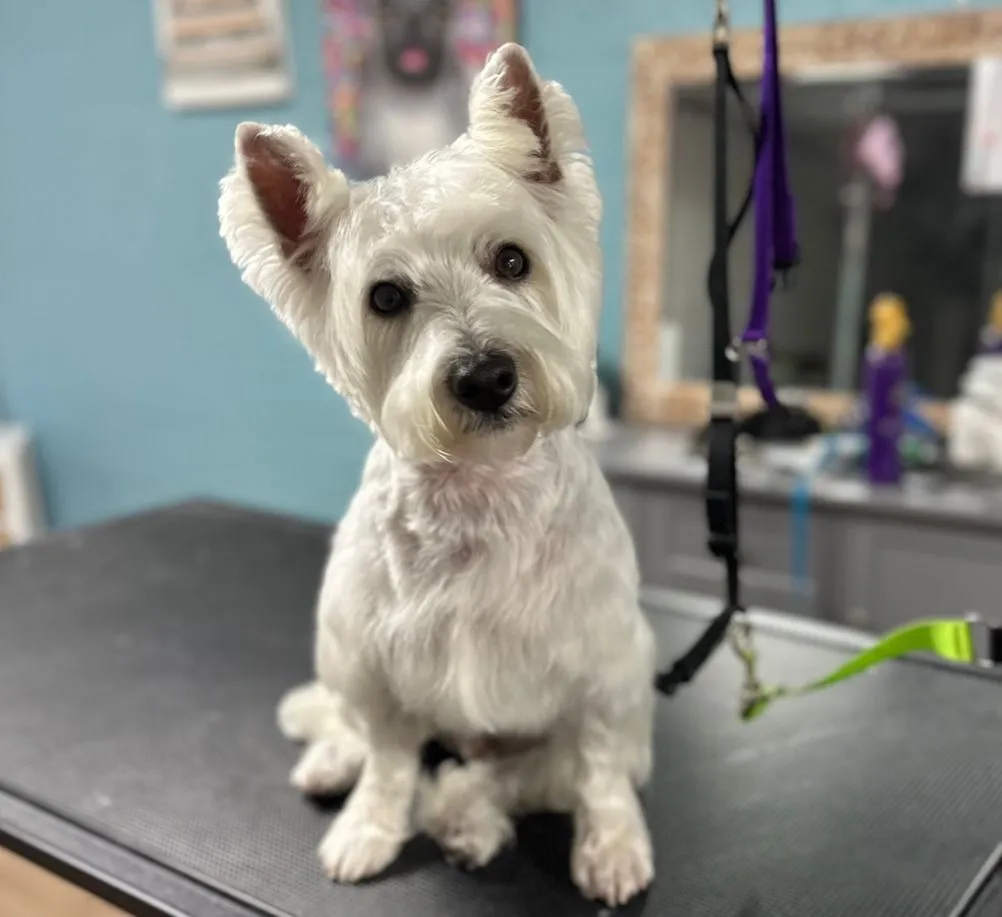
That brilliant white coat is the Westie's most recognizable feature, but it also demands consistent care. Unlike single-coated breeds, the Westie's double coat requires specific grooming techniques to maintain its proper texture and keep the white fur looking clean and bright rather than dingy or yellowed.
Key Coat Characteristics
- Outer coat: Harsh, straight, wiry - approximately 2 inches long
- Undercoat: Soft, dense, and close-fitting for insulation
- Color: Pure white (always)
- Shedding: Low to moderate - dead coat stays trapped and needs removal
- Skin sensitivity: HIGH - Westies are genetically prone to allergies and skin conditions
Why Westies Need Professional Grooming
Westies are not a wash-and-go breed. Their double coat requires professional attention to maintain the correct texture and shape. Without regular grooming, the outer coat softens and loses its weather-resistant properties, while the undercoat becomes packed and can lead to skin problems.
For show dogs, hand stripping is the gold standard. This involves plucking dead outer coat hairs by hand or with a stripping knife, which encourages the growth of a new, properly textured coat. For pet Westies, most owners opt for regular clipping, which is faster and more comfortable, though it does gradually soften the coat texture over time.
Because Westies are prone to atopic dermatitis and other skin allergies, a groomer experienced with the breed knows to watch for hot spots, excessive scratching, and irritated skin during every session. Our cage-free, one-on-one approach means we can give your Westie the careful, gentle attention their sensitive skin requires.
Popular Westie Haircuts
Westie Cut (Breed Standard)
The classic Westie silhouette: a rounded head that blends into a shorter body, with slightly longer furnishings on the legs and a carrot-shaped tail. This cut highlights the breed's natural shape and personality.
Maintenance: Brush 2-3 times per week
Puppy Cut
A uniform length all over (typically 1-2 inches), giving your Westie a youthful, easy-care look. The most popular choice for pet owners who want a cute appearance without intensive upkeep.
Maintenance: Brush 2 times per week
Show Trim (Hand Stripped)
The traditional hand-stripped coat preserves the harsh, wiry texture the breed is known for. The coat is shaped to precise proportions with longer skirt furnishings and a perfectly rounded head. Requires significant commitment and regular stripping sessions.
Maintenance: Professional stripping every 4-6 weeks, daily brushing
Short Clip
A practical option for active Westies or warmer months. The body is clipped shorter than a puppy cut while keeping a bit more length on the head and legs for a tidy, sporty appearance.
Maintenance: Brush 1-2 times per week
Common Westie Grooming Challenges
Keeping the White Coat Clean
A Westie's white coat shows every bit of dirt, grass stains, and discoloration. Here are the most common challenges:
- Tear staining - Reddish-brown streaks under the eyes are extremely common in Westies. Regular face cleaning and keeping the eye area trimmed helps minimize staining.
- Beard staining - Food and water can discolor the muzzle fur. Wiping the beard after meals and using a stainless steel water bowl (not plastic) reduces yellowing.
- Paw staining - Saliva from licking and contact with grass can turn white paws pink or brown. This often signals underlying allergies that should be addressed with your vet.
- Belly and leg yellowing - Contact with urine and damp grass causes yellowing. Regular sanitary trims and whitening shampoos help.
Skin Sensitivity & Allergies
Westies are one of the breeds most susceptible to skin conditions. As groomers, we watch for:
- Atopic dermatitis - Chronic itching, redness, and inflammation triggered by environmental allergens
- Dry, flaky skin - Over-bathing strips natural oils; we use gentle, hypoallergenic shampoos
- Hot spots - Moist, irritated patches that develop quickly, especially in warm weather
- Yeast infections - Common in ears and skin folds; we check ears thoroughly at every appointment
If we notice any skin concerns during grooming, we always let you know so you can follow up with your veterinarian.
At-Home Care Tips
- Brush 2-3 times per week - Use a slicker brush to remove loose undercoat, followed by a steel comb to check for tangles
- Clean the face daily - Wipe around the eyes and beard with a damp cloth to prevent tear and food staining
- Don't over-bathe - Once every 4-6 weeks is sufficient. Frequent baths strip the coat's natural oils and worsen skin issues
- Use whitening shampoo sparingly - A quality whitening shampoo brightens the coat, but overuse can dry out sensitive Westie skin
- Check ears weekly - Westies grow hair inside their ears that can trap moisture and lead to infections
- Trim nails regularly - White nails make it easier to see the quick, but small dogs still need frequent trims
- Watch for scratching - Excessive scratching or chewing at paws often signals allergies; consult your vet early
- Address mats promptly - Mats in the undercoat can hide skin irritation. If you find tangles you cannot brush out, bring your Westie in for professional dematting before the problem worsens
Professional Grooming Schedule
Most Westies do best with professional grooming every 6-8 weeks. If you prefer the hand-stripped show coat, plan for stripping sessions every 4-6 weeks to keep the coat rotating properly. For clipped pet Westies, stretching beyond 8 weeks can lead to a packed undercoat that traps dirt and irritates the skin.
Between grooming visits, regular brushing is essential to manage the undercoat and prevent matting. Because of the Westie's tendency toward skin issues, consistent undercoat removal is not just about appearance - it directly affects your dog's skin health and comfort.
If your Westie has particularly sensitive skin or ongoing allergy issues, we can adjust our products and techniques accordingly. Just let us know when you schedule your appointment.
Related Grooming Guides
From our blog: What Your Groomer Sees That You Miss
Time for Your Westie's Groom?
Whether it's a classic Westie cut or a low-maintenance clip, we'll keep your Westie's white coat bright and their sensitive skin comfortable. Cage-free, one-on-one attention every time.