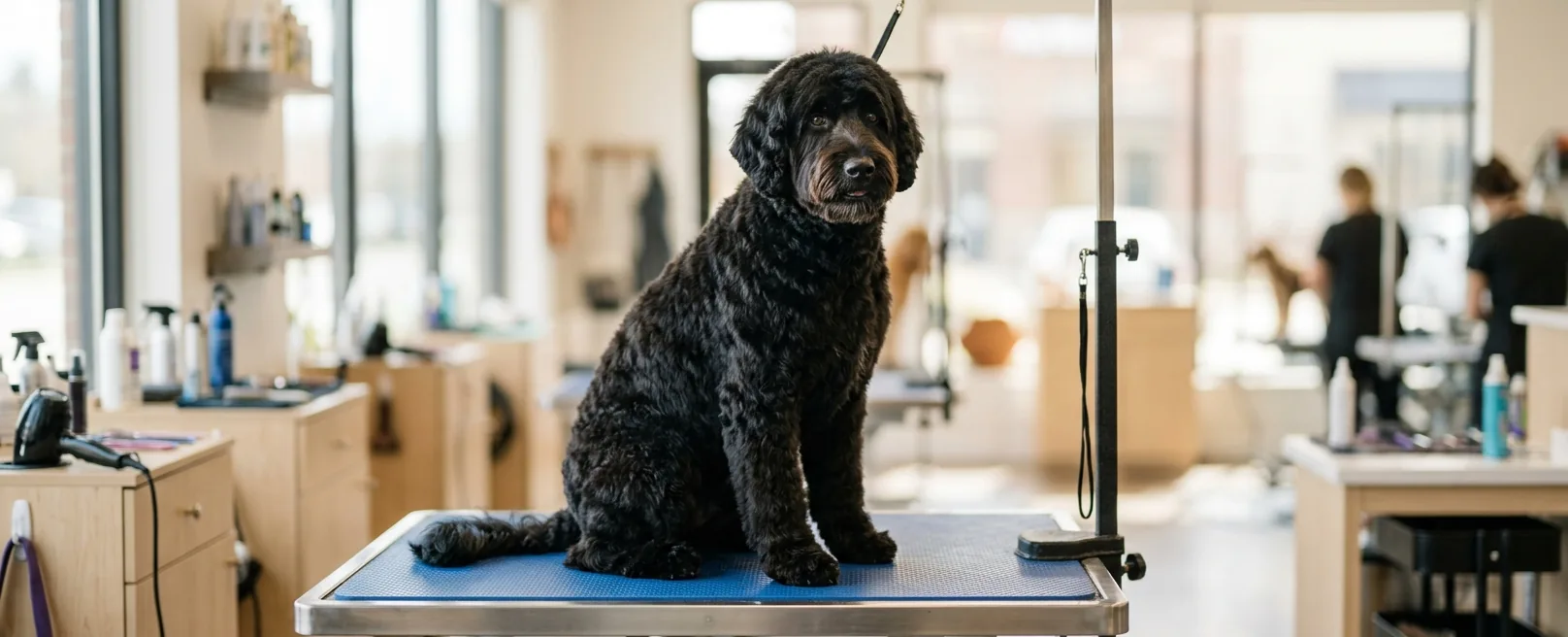
Portuguese Water Dog Grooming Guide
Everything you need to know about grooming the Portuguese Water Dog - a hypoallergenic, athletic breed with a thick, water-resistant coat built for working in the ocean.
The Portuguese Water Dog Coat: Two Types, One Incredible Texture
The Portuguese Water Dog (PWD) has one of the most distinctive coats in the dog world. Unlike most breeds, PWDs come in two coat varieties: wavy and curly. Both types are single-layered with no undercoat, which makes them hypoallergenic and virtually non-shedding. Their hair grows continuously, much like a Poodle's, which means regular haircuts are not optional - they are essential.
The wavy coat falls in loose, gentle waves with a slight sheen. It has a softer texture and tends to lie flatter against the body. The curly coat forms tight, compact curls similar to a Poodle but with a coarser, more robust feel. Both coat types share the same thick, water-resistant quality that made this breed famous - the hair is dense enough to insulate in cold Atlantic waters yet does not become waterlogged.
Built for the Water
The Portuguese Water Dog was bred along the coast of Portugal to work alongside fishermen. Their jobs included herding fish into nets, retrieving lost tackle and broken nets from the water, and swimming between boats to carry messages. Every aspect of their coat - the density, the water resistance, the lack of an undercoat that would hold water weight - was shaped by centuries of working in the ocean. The traditional lion cut was not just a fashion statement; it reduced drag in the water while keeping the chest and joints warm.
How Often Should a Portuguese Water Dog Be Groomed?
| Coat Type | Professional Grooming | Home Brushing |
|---|---|---|
| Wavy coat | Every 4-6 weeks | Every 2-3 days |
| Curly coat | Every 4-6 weeks | Every other day |
Both coat types need professional grooming on the same schedule because the hair grows continuously and will not stop on its own. The difference is in home maintenance: curly coats tangle and mat faster than wavy coats, so they need more frequent brushing between appointments. Regardless of coat type, skipping a grooming cycle often means dealing with mats that require extra time (and cost) to remove.
Popular Portuguese Water Dog Haircuts
Lion Cut
The traditional, breed-standard clip with deep roots in the PWD's working history. The hindquarters, muzzle, and base of the tail are clipped short, while the front of the body - chest, shoulders, and front legs - is left at full length. A plume is left on the tip of the tail. This cut is striking, historically authentic, and still functional for water work.
Retriever Cut
The most popular pet cut for Portuguese Water Dogs. The entire coat is trimmed to an even length, typically around 1 inch all over, following the natural contour of the body. Clean, neat, and much easier to maintain than the lion cut. This is what most PWD owners choose for everyday life.
Working Cut
A practical, no-fuss trim where the coat is scissored to roughly 1 inch all over with slightly more length left on the chest and legs for protection. Designed for active dogs that swim, hike, or work outdoors regularly. Easy to maintain and dries quickly after water activities.
Puppy Cut
A short, uniform clip (about ½ to 1 inch) all over the body, face, and legs. The simplest option for owners who want minimal home maintenance. Works especially well for PWD puppies getting used to the grooming process, and for older dogs whose owners prefer a low-effort coat.
Coat Maintenance: What PWD Owners Need to Know
Portuguese Water Dog grooming requirements are very similar to Poodle grooming - and for good reason. Both breeds have continuously growing, single-layer coats that do not shed in the traditional sense. Instead of dropping hair onto your furniture, loose hairs get trapped within the coat. If those hairs are not brushed out regularly, they tangle and form mats, sometimes within just a few days.
The areas most prone to matting on a PWD are behind the ears, in the leg furnishings (the longer hair on the legs), under the front legs where the leg meets the chest, and around the collar area where friction from a collar or harness compresses the hair. These spots need focused attention during every brushing session.
Matting is not just a cosmetic issue. Tight mats pull on the skin, restrict airflow, trap moisture, and can hide skin irritation or even parasites. Our dematting service can address mild to moderate cases, but in severe situations the only humane option is to shave the coat down and start fresh - which is stressful for both the dog and the owner. Consistent brushing is the single most important thing you can do between professional grooming appointments.
Home Care Tips for Portuguese Water Dogs
- Use a slicker brush and metal comb - A slicker brush is your primary tool for working through the coat. Follow up with a metal comb to check for tangles the brush missed. If the comb snags, there is a mat forming - address it immediately before it tightens.
- Brush in sections, down to the skin - Lifting the coat and brushing in layers ensures you reach the hair closest to the skin, where mats start. Surface brushing only makes the top layer look smooth while mats build underneath.
- Check ears after every swim - PWDs love water, and many owners encourage swimming. But moisture trapped in the ear canal is a direct path to ear infections. After every swim or bath, dry the inside of the ears thoroughly with a clean towel or cotton ball. The ear canal should be dry, not damp.
- Dry the coat completely after water exposure - The PWD's thick, dense coat can hold a surprising amount of moisture. If the coat stays damp for extended periods, it creates the perfect environment for hot spots, fungal infections, and that unmistakable musty smell. Blow-dry on a low heat setting after baths, and towel-dry thoroughly after swimming.
- Pay attention to paw hair - PWDs grow significant hair between their toes and paw pads. This hair collects debris, gets matted, and can cause slipping on smooth floors. Trim it flush with the pads between grooming appointments using blunt-tip scissors or a small clipper.
- Watch for skin issues under the coat - Because the coat is so dense, skin irritation can go unnoticed. During brushing sessions, look for redness, flaking, bumps, or unusual odor. Catching problems early makes treatment much simpler.
- Keep up with nail trims - PWDs are an active, medium-sized breed (35-60 pounds), and overgrown nails change how they walk and can lead to joint strain. Nails should be trimmed every 2-3 weeks.
The Hypoallergenic Factor
Portuguese Water Dogs are one of the breeds most commonly recommended for people with dog allergies, and for good reason - they produce significantly less dander than shedding breeds and their hair does not float through the air the way shed fur does. However, no dog is truly 100% hypoallergenic. Regular grooming plays a major role in keeping allergen levels low. A well-maintained, frequently bathed and brushed PWD will cause far fewer allergy symptoms than a neglected one with a matted, dirty coat.
Ready to Book Your Portuguese Water Dog's Groom?
One-on-one attention in a calm, quiet space. We understand the PWD coat - wavy or curly, lion cut or retriever cut, your dog is in expert hands. See what to expect at your first visit.